Home › Dryer shuts off mid-cycle
Dryer Shuts Off Mid-Cycle in Cedar Rapids
A dryer that quits partway through and runs again 30 minutes later has an overheating motor, and a blocked vent is usually why. If it restarts right away, look at the door switch. If it only stops early on Auto Dry, the moisture sensor is dirty.
- Same-day or next-morning visits
- Price before any work
- 90-day OEM parts and labor warranty
- Vent checked on every call
Most shutdown repairs
$75 to $190
Vent cleaning, door switch, fuse, thermostat or rollers, with parts and labor included. You approve the price first.
The short answer
When a dryer shuts off mid-cycle and restarts after it cools, the motor’s thermal overload is tripping, almost always because a blocked vent or a dragging drum makes it overheat. If it restarts right away, a worn door switch is the likely cause. In Cedar Rapids the repair typically costs $75 to $190.
$75 to $190
typical repair, parts and labor
30 to 90 min
on site for most repairs
90 days
OEM parts and labor warranty
Start here: which one is happening?
A dryer that starts and then quits partway through has one of three problems, and each one has a different fix. Work out which one before you replace anything.
| What you see | What it points to | Where to go next |
|---|---|---|
| Stops partway, won’t restart for 20 to 40 minutes, then runs again | The motor’s thermal overload is tripping | The 30-minute test below |
| Stops partway, restarts right away when you press start | Door switch, latch or a loose connection | Door switch section below |
| Runs the full time on Timed Dry, ends early on Auto or Sensor Dry | Moisture sensor misreading the load | The timed cycle test below |
| Stops and never runs again | Blown thermal fuse | Dryer won’t start |
| Runs the whole cycle but clothes are still damp | Airflow restriction, not a shutdown | Dryer vent cleaning |
The 30-minute test for an overheating motor
Every dryer motor has a thermal overload built in. When the motor gets too hot, it cuts power. When it cools, it resets. That self-resetting pattern is the fingerprint of this fault, and nothing else in a dryer behaves that way.
- Run the dryer until it stops on its own. Note roughly how many minutes it ran.
- Try to start it again right away. If it is the overload, nothing happens, or the motor hums without turning.
- Wait 30 minutes. Don’t open any panels.
- Start it again. If it now runs normally, the motor’s thermal overload stopped it.
- Compare the run times. If it runs a shorter time on each try, the cause behind it is getting worse.
A tripping overload is the motor protecting itself. The motor usually isn’t the problem, so replacing it without finding out why it overheated brings the same failure back.
Why the motor overheats
Restricted airflow
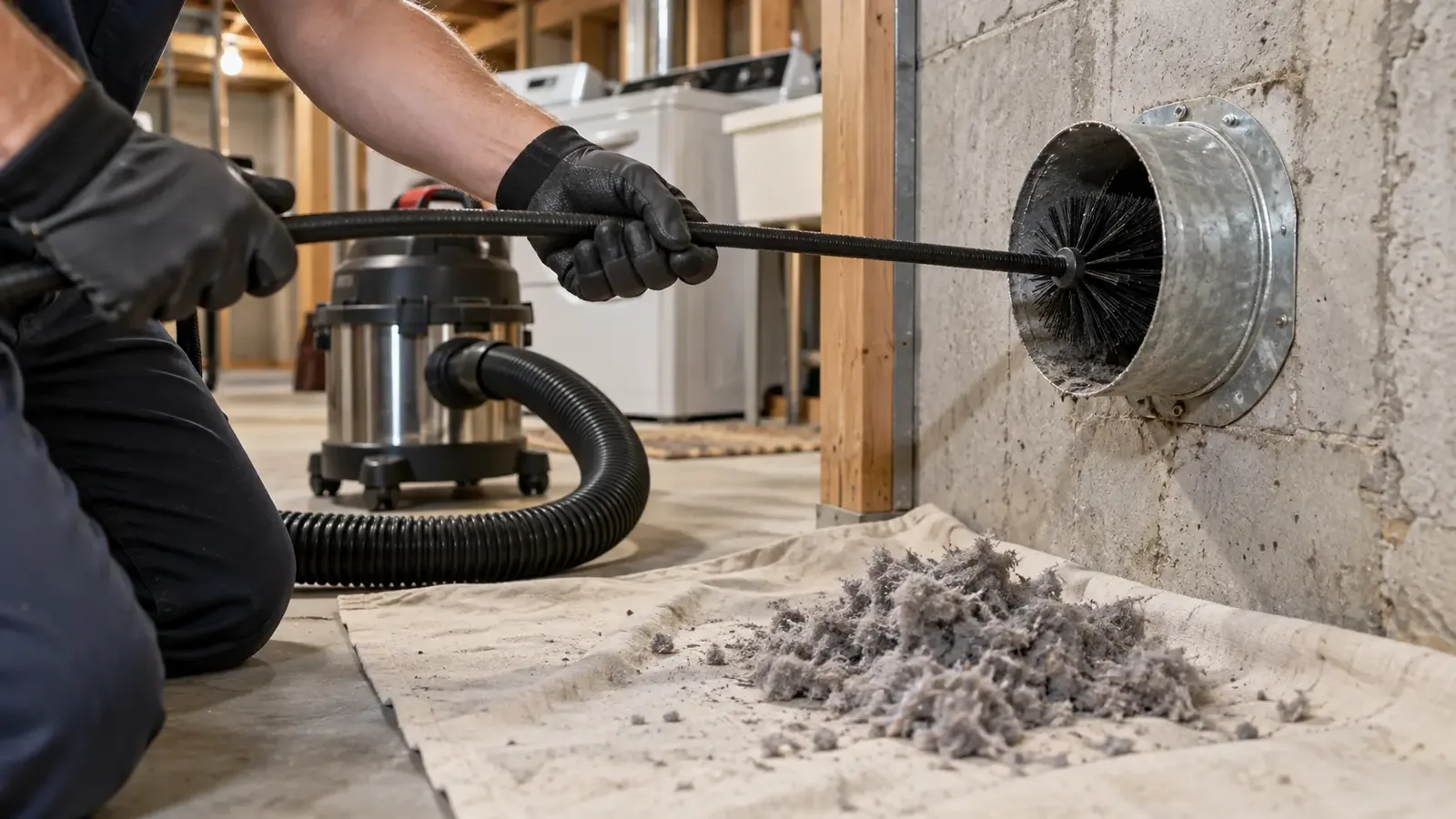
The blower sits on the same motor. When the vent is blocked, hot air stays in the cabinet and the motor sits in that heat for the whole cycle. This is the most common cause by far.
What we test: airflow at the outside hood and the full length of the vent.
A drum that drags
Worn rollers or a failing rear bearing make the motor work harder every second. The extra load becomes heat in the motor. There is usually a noise before there is a shutdown.
What we test: roller and bearing condition. See dryer making noise.
A warm, closed laundry room
A dryer pulls its air from the room. In a closed closet or a sealed basement, it breathes its own warm exhaust and runs hotter as the cycle goes on.
What we test: the room’s air supply and the vent connection behind the dryer.
A failing high-limit or cycling thermostat
On some dryers, a thermostat that trips too early shuts the heat off and the cycle ends early or cold. On models with a combined circuit, the whole dryer stops.
What we test: each thermostat against the maker’s spec.
The timed cycle test: is it really shutting off?
Auto Dry and Sensor Dry end when two metal strips inside the drum stop sensing moisture. Fabric softener and dryer sheets leave a film on those strips that reads as dry, so the cycle ends after 10 or 15 minutes with a wet load. People call this shutting off, and it is the most misdiagnosed version of this problem.
- Set the dryer to Timed Dry for 40 minutes.
- If it runs the full 40 minutes, nothing is cutting power. The sensor is misreading.
- If it also quits on a timed cycle, it is a real shutdown. Go back to the 30-minute test.
To clean the strips, unplug the dryer and find the two thin metal bars just inside the door opening. Wipe them with rubbing alcohol until the metal is bare. Don’t scratch them. If the load dries properly on Auto afterward, that was the whole fault, and it costs nothing to fix.
Door switches, latches and loose wires
If the dryer stops but starts again right away with no cooling off, heat isn’t the problem. Something is breaking the circuit for a moment.
- Door switch. As the plunger wears, vibration can open it for a split second and stop the dryer. Run the dryer and press gently on the door. If it cuts out, that is your fault.
- Door latch or strike. A worn strike lets the door sit loose, which acts like a worn switch.
- Terminal block or cord. A loose connection where the cord meets the dryer heats up, breaks contact and remakes it when it cools.
Stop using the dryer if you see scorch marks at the terminal block, the plug or outlet is hot, or you smell hot plastic. That is an electrical fault and a fire risk.
Why this happens more in Cedar Rapids
Two things about houses here push dryers toward this fault, and they show up at different times of year.
Long basement vent runs
In older parts of the city, the laundry was often moved to the basement long after the house was built, so the vent travels a long way and turns several times to reach an outside wall. The 2024 building code Cedar Rapids uses (IRC M1502) caps a standard dryer vent at 35 feet and takes 5 feet off that limit for every 90-degree turn. A run that looks short can be well past the limit. We see the longest runs in Czech Village off 16th Avenue SW and around the southeast side.
The Iowa temperature swing
In winter, cold intake air and frozen vent flaps make every load take longer, so the motor runs longer and hotter. January lows here average about 10°F. In July and August, an unventilated basement or garage laundry room runs warm, so the motor starts each cycle closer to its limit. A vent restriction that built up quietly for months often gets pushed over the line in one of those two seasons. Our post on why dryers work harder in Iowa winters covers the winter side.
Why did my dryer start shutting off in winter?
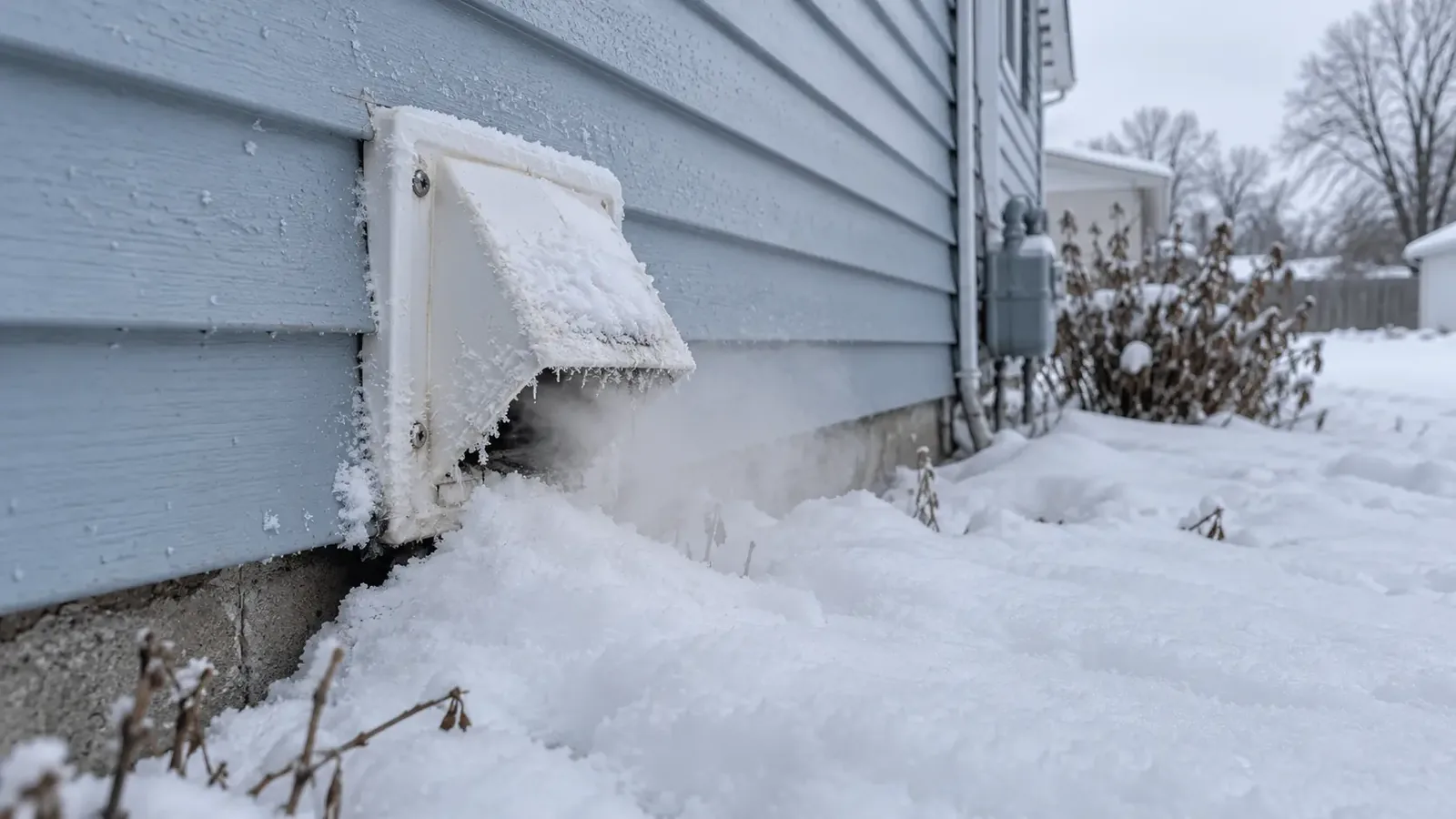
Cold intake air makes each load take longer, so the motor runs longer and hotter, and ice on the outside vent flap traps heat. A restriction that was fine in mild weather becomes the thing that trips the overload. Clear the outside hood first, then have the vent cleaned.
What it costs to fix
Most mid-cycle shutdowns are fixed for $75 to $190 for parts and labor, and many are just a vent cleaning. You get the exact price after the diagnosis and before any work starts.
| Repair | Typical price | Time on site |
|---|---|---|
| Vent cleaning (if restriction caused it) | $80 to $150 | 30 to 45 min |
| Door switch | $75 to $120 | 30 to 45 min |
| Thermal fuse | $85 to $130 | 30 to 45 min |
| Cycling or high-limit thermostat | $75 to $120 | 30 to 45 min |
| Drum rollers (if drag loaded the motor) | $110 to $190 | 60 to 90 min |
| Rear drum bearing or glides | $130 to $210 | 60 to 90 min |
| Drive motor | $150 to $280 | 60 to 90 min |
Cleaning the moisture sensor strips isn’t a billable repair. If that turns out to be the whole problem, we’ll tell you on the visit. The full cost guide lists every part.
Dryer not working?
Tell us how long it runs before it stops and whether it restarts right away. Calls before noon usually get a same-day visit.
Dryer shutting off: more questions
Questions we hear on shutdown calls around Cedar Rapids, Marion and Hiawatha.
Why does my dryer stop partway and then work again later?
That is the motor’s thermal overload. It opens when the motor gets too hot and closes again once it cools, usually within 20 to 40 minutes. The real cause is almost always restricted airflow or a drum dragging on worn rollers, so it keeps happening until that is fixed.
Is a dryer that shuts off mid-cycle dangerous to use?
The overload is a safety device doing its job, but the overheating behind it shouldn’t be ignored. Stop using the dryer if you smell burning or hot plastic, the cabinet is hot rather than warm, or there are scorch marks at the terminal block or outlet.
My dryer stops after ten minutes with wet clothes. Is the motor failing?
Probably not. Run it on Timed Dry for 40 minutes. If it finishes, the moisture sensor is reading a false dry, usually from fabric softener film on the sensor strips. Unplug the dryer and wipe them with rubbing alcohol.
Does a blocked vent really stop the whole dryer?
Yes. Trapped heat makes the motor overheat until its overload trips, and on many models it also trips the high-limit thermostat or blows the thermal fuse. Once the fuse blows, the dryer won’t start at all. See our vent cleaning page.
It only shuts off with towels and bedding. Is it broken?
It is close to its limit rather than broken. Heavy loads run longer, so the motor gets hotter. A partly blocked vent or worn rollers usually make the difference. Fix those and big loads finish again.
Stop the mid-cycle shutdowns
Call before noon for a same-day visit in Cedar Rapids, Marion or Hiawatha. We check the vent on every call, you get the price before we start, and OEM parts and labor carry a 90-day warranty. See our main dryer repair in Cedar Rapids page for other problems.