Why Dryers Work Harder in Iowa Winters (and What Breaks First)
Why Dryers Work Harder in Iowa Winters (and What Breaks First)
Every winter, right around the time the first hard freeze settles over Cedar Rapids, our phone starts ringing with the same complaint: “My dryer stopped working and I don’t know why.” It ran fine in October. Now it’s December, it’s blowing cold, and the laundry is piling up. There’s a reason this happens on a schedule, and once you understand it, you can often spot the problem before you even call anyone.
Cedar Rapids winters run hard from October through April. Your dryer works harder in those months than it ever does in summer, and Iowa’s cold does specific things to a dryer that most repair companies never bother to explain. This is the local mechanic’s version, what actually goes wrong, why, and what you can check yourself before the truck rolls out. If your dryer is dead cold right now, call (319) 732-0047 and we’ll be out same day.
The Frozen Vent Cap, Iowa’s Sneakiest Dryer Problem
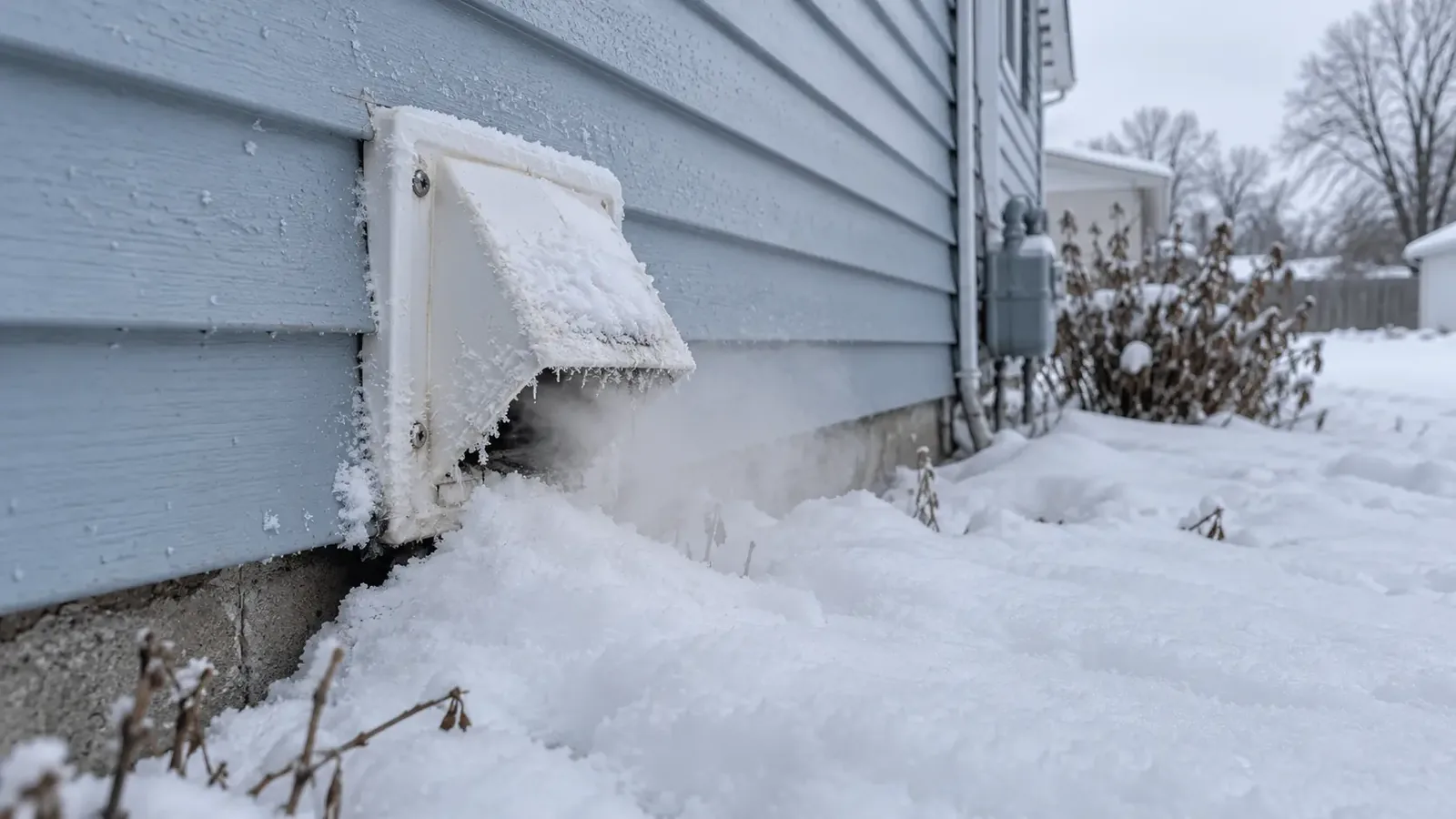
Here’s the one almost nobody tells you about. Your dryer pushes hot, moist air out through a vent pipe that exits through your exterior wall or roof. At the end of that pipe is a vent cap with a small flap that opens to let air out and closes to keep critters and drafts from coming in.
In a Cedar Rapids winter, that flap freezes. Warm, damp air hits the sub-zero cap, condenses, and freezes the flap shut. Sometimes snow and ice pack the whole cap solid. When that happens, the hot air your dryer is producing has nowhere to go. Heat backs up inside the drum. The high-limit thermostat senses the overheat and shuts the heating element off to protect the machine. Your dryer keeps tumbling but stops heating, and it looks for all the world like a dead heating element or a mechanical failure.
What you can do first: before you call anyone, go outside and look at your exterior vent cap. Clear any snow or ice packed around it. Make sure the flap moves freely. This one check has saved plenty of Cedar Rapids homeowners a service call, if a frozen cap was the whole problem, clearing it gets your dryer heating again. If it’s already clear and the dryer still won’t heat, the backed-up heat may have already taken out a part, which brings us to the next one.
Thermal Fuse Failures Spike Every Cedar Rapids Winter
The thermal fuse is a small safety device that permanently cuts power when the dryer runs too hot. Unlike a thermostat, it does not reset, once it blows, the dryer stops heating (or stops running entirely on some models) until the fuse is physically replaced.
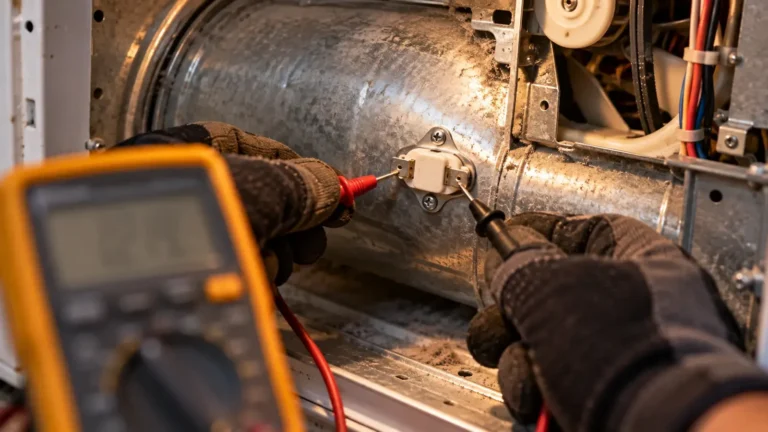
Winter is thermal-fuse season. A partially frozen vent cap or a vent partly clogged with lint makes the dryer run hotter than it should, cycle after cycle. Eventually that heat trips the fuse for good. We replace more thermal fuses in Cedar Rapids between November and February than in all the other months combined. If your dryer quit heating after a cold snap, and your vent cap is clear, a blown thermal fuse is the most likely cause. You can read the full symptom breakdown on our guide to how to tell if your thermal fuse is blown, or the same-day repair details on our dryer not heating page.
The important takeaway: a blown thermal fuse is usually a symptom, not the root cause. If we just swap the fuse and don’t clear the airflow problem that blew it, it’ll blow again. That’s why we clean the vent on the same visit, fix the cause, not just the part.
Heavy Winter Loads Wear Parts Faster
Think about what goes in your dryer in January versus July. Winter laundry in Iowa is heavy: thick coats, wool sweaters, flannel sheets, layered bedding, kids’ snow gear. All that extra weight and the longer run times it demands put real stress on the moving parts inside the machine.
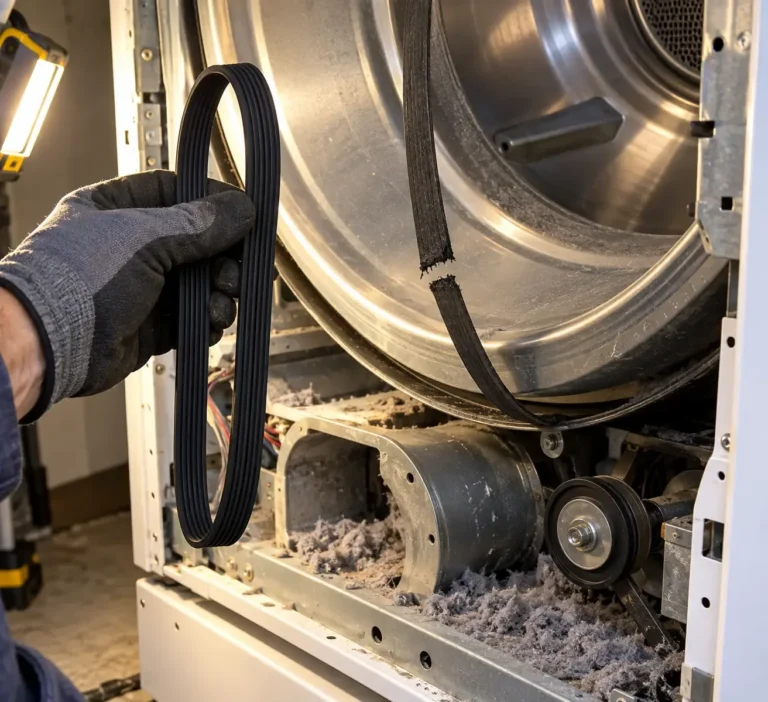
The three parts that feel it most are the drive belt, the drum rollers, and the motor. Heavier loads mean the drum is harder to turn, so the belt works harder and the rollers carry more weight for longer. That’s why Cedar Rapids homes tend to see more drum-roller and belt calls in late winter than any other time of year. If you start hearing a new thumping, grinding, or squealing noise around January or February, that extra winter load is very often the reason. Our dryer making noise page walks through exactly what each sound means.
Why “It Worked Fine Last Month” Makes Sense
The reason winter dryer failures feel so sudden is that they’re the result of stress that builds up quietly. A vent that was 70% clear in fall gets a little more lint and a little ice, and one cold morning it tips over into a real airflow problem. A drum roller that was slightly worn carries heavy winter bedding for a few weeks and finally starts to grind. Nothing dramatic happened overnight, the cold just pushed an already-stressed machine over the edge. That’s also why the fixes are usually straightforward and affordable once you know what to look for.
A Simple Winter Checklist Before You Call
- Check the exterior vent cap. Clear snow and ice, make sure the flap swings freely. This alone fixes a surprising number of “dead” dryers.
- Check the breaker. A dryer runs on two 120-volt legs. If one trips, the drum still spins but the heat dies. Reset both breakers fully (off, then on).
- Clean the lint screen. Every load, every time. A packed screen chokes airflow and pushes the machine toward the overheating that blows thermal fuses.
- Listen for new noises. A fresh thump or grind in deep winter usually means a drum roller or belt under heavy-load stress.
- Note when it stopped. If heat died right after a cold snap, think vent cap and thermal fuse first.
When to Call a Cedar Rapids Technician
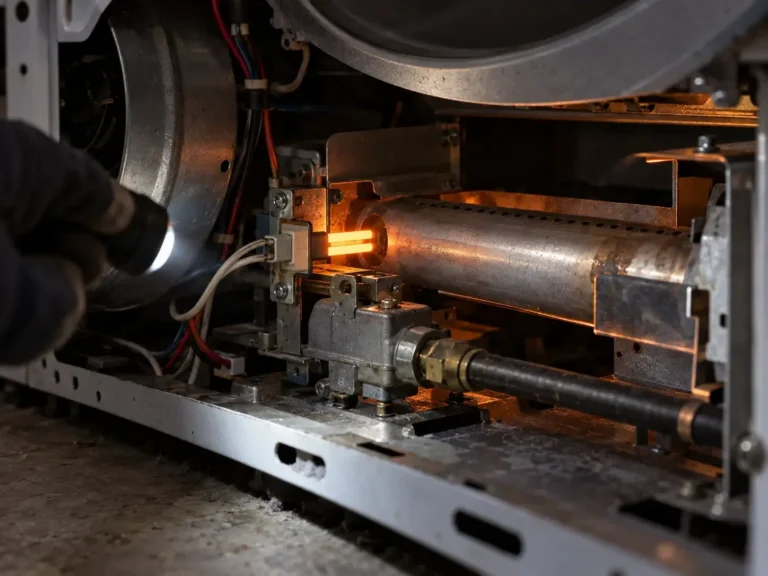
If you’ve cleared the vent cap, reset the breakers, and cleaned the lint screen and the dryer still won’t heat or still sounds rough, it’s time for a diagnosis. A no-heat dryer with a clear vent almost always means a blown thermal fuse, a failed heating element, or a bad thermostat, all testable with an ohm meter and all affordable to fix. We come to your Cedar Rapids home the same day, test the components one at a time, and quote you the exact repair before doing any work.
Our technicians have spent years fixing dryers in Linn County laundry rooms and know exactly how Iowa winters beat up these machines. Every repair follows the manufacturer wiring diagram, uses genuine parts, and carries a 90-day parts-and-labor warranty. Wondering whether an older machine is even worth fixing? Our repair or replace guide lays out the math.
Prevent Next Winter’s Breakdown
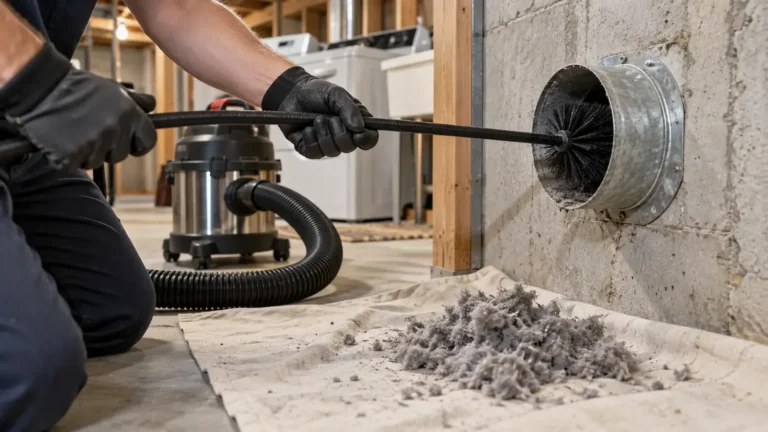
The single best thing you can do to avoid a mid-winter dryer failure is have the vent cleaned before the cold sets in. A clear vent runs cooler, dries faster, and is far less likely to blow a thermal fuse or start a fire. We recommend a vent cleaning at least once a year, ideally in fall before the freeze. See our dryer vent cleaning page for details, and our guide on how often to clean your dryer vent for the schedule that fits your household.
Dryer not working this winter? Call (319) 732-0047, Monday through Saturday, 8 AM to 6 PM. Same-day service across Cedar Rapids, Marion, Hiawatha, and all of Linn County. Upfront pricing, 90-day warranty.
If the dryer stops partway through a cycle and then runs again once it cools, see dryer shuts off mid-cycle.