Home › Dryer not heating
Dryer Not Heating in Cedar Rapids
If your dryer runs but won’t heat, the cause is usually a blown thermal fuse, a failed heating element or igniter, or a clogged vent. We test the heating circuit in your home and fix most of them the same day, with the price agreed before we start.
- Same-day or next-morning visits
- Price before any work
- 90-day OEM parts and labor warranty
- Gas and electric dryers
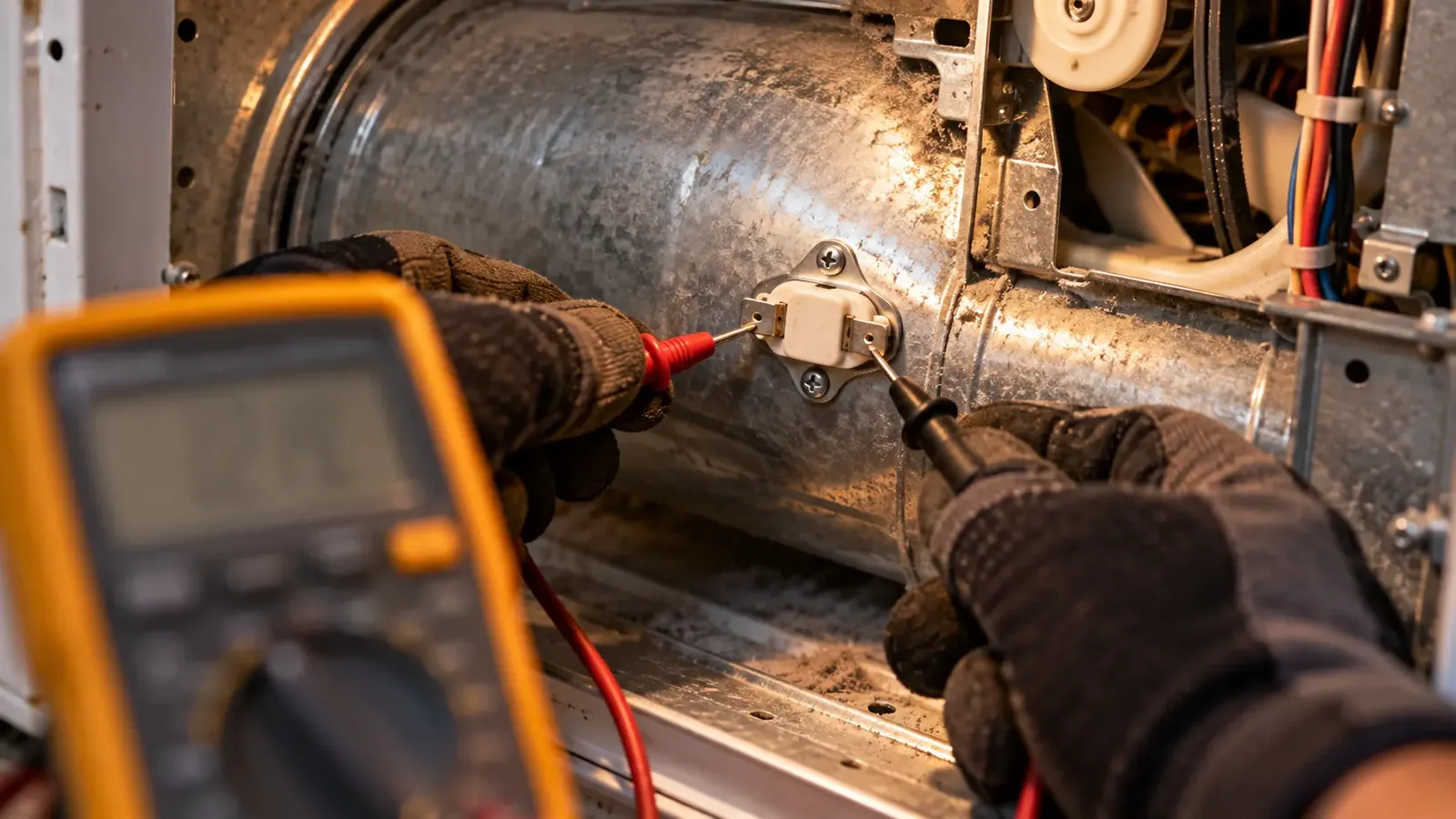
Most no-heat repairs
$75 to $200
Thermal fuse, thermostat, heating element or igniter, with parts and labor included. You approve the price first.
The short answer
A dryer that runs but doesn’t heat usually has a blown thermal fuse, a burned-out heating element (electric) or igniter (gas), or a failed thermostat. A clogged vent is often what caused the part to fail. In Cedar Rapids the repair typically costs $75 to $200 and takes one visit.
$75 to $200
typical no-heat repair, parts and labor
30 to 75 min
on site for most repairs
90 days
OEM parts and labor warranty
Why a dryer runs but won’t heat
A dryer that tumbles but blows cold air almost always has one failed part in its heating circuit, or a vent problem that caused that part to fail. These are the six causes we find, roughly in the order we check them.
A blocked vent that makes the dryer overheat
This is the root cause behind most no-heat calls. Lint packs the vent line, hot air can’t get out, and the dryer shuts its own heat off to protect itself. Fix the part without fixing the vent and it fails again within weeks.
What we test: airflow at the outside hood and the duct behind the machine.
A blown thermal fuse
The thermal fuse is a one-time safety part on the exhaust duct. When the dryer runs too hot, it opens and the heat stays off for good. The drum still turns, so it looks like the dryer works until you touch the clothes.
What we test: continuity across the fuse with a meter. Our thermal fuse guide shows how it fails.
A burned-out heating element (electric dryers)
The element is a coil of wire inside a metal housing. After years of heavy loads it cracks or touches the housing and stops making heat. On some models a failed element also trips the breaker.
What we test: resistance across the coil and a check for a short to the housing.
A failed igniter or gas valve coils (gas dryers)
A gas dryer lights its burner with a glowing igniter, then opens the gas valve with two small coils. If the igniter glows but no flame appears, the coils are usually the fault. If nothing glows at all, look at the igniter or a fuse.
What we test: the igniter, the flame sensor and the valve coils. More on our gas dryer repair page.
A worn cycling or high-limit thermostat
These two thermostats switch the heat on and off during the cycle. When one sticks open, the dryer runs cold. When it drifts, the dryer heats for a few minutes and then quits too early.
What we test: each thermostat against the maker’s spec, and we only replace the one that is out of range.
Only half the power reaching an electric dryer
An electric dryer runs its motor on 120 volts but needs the full 240 volts to make heat. If one side of the double breaker trips, the drum spins and the air stays cold. We saw a lot of this after the August 2020 derecho knocked out power across Linn County.
What we test: voltage at the outlet or terminal block before we open the dryer. See our electric dryer repair page.
What to check before you call
These five checks are safe for anyone and take about ten minutes. They solve a no-heat problem more often than you might think.
- Reset both breakers. An electric dryer uses a double breaker. Turn it fully off, then back on, even if it doesn’t look tripped.
- Pick a heat setting. Air Fluff and some wrinkle settings run with no heat at all.
- Clean the lint screen and look at the outside vent hood while the dryer runs. The flap should open and you should feel strong, warm air.
- Check the duct behind the dryer. A foil duct that got crushed when the dryer was pushed back will choke the airflow.
- On a gas dryer, make sure the yellow-handled shutoff valve behind the machine is open (the handle runs along the pipe).
If you smell gas, don’t touch the dryer or any light switches. Leave the house and call Alliant Energy at 1-800-255-4268, then call us once the line is safe.
Electric or gas: where the heat fails
About three out of four homes in Cedar Rapids heat with natural gas, according to Census data, so a lot of laundry rooms here have a gas dryer. The parts that make heat are different, but the safety parts are the same.
| Electric dryer | Gas dryer | |
|---|---|---|
| Makes the heat | Heating element | Burner, igniter and gas valve coils |
| Safety parts | Thermal fuse, high-limit thermostat | Thermal fuse, high-limit thermostat, flame sensor |
| Most common failure | Thermal fuse or element | Igniter or valve coils |
| Quick home check | Both sides of the double breaker | Gas shutoff valve open |
What a no-heat repair costs
Most no-heat repairs in Cedar Rapids cost $75 to $200 for parts and labor, and nearly all of them are done in one visit. You get the exact price after the diagnosis and before any work starts.
| Repair | Typical price | Time on site |
|---|---|---|
| Thermal fuse | $85 to $130 | 30 to 45 min |
| Cycling or high-limit thermostat | $75 to $120 | 30 to 45 min |
| Heating element (electric) | $120 to $200 | 45 to 75 min |
| Gas igniter | $100 to $180 | 30 to 60 min |
| Dryer vent cleaning | $80 to $150 | 30 to 45 min |
Prices cover the part and the labor. The full dryer repair cost guide lists every part we replace.
Is it worth replacing a heating element on an older dryer?
Usually, yes. An element costs $120 to $200 installed, and a new dryer runs about $600 to $1,200. If the drum, motor and bearings are still quiet and smooth, the element repair gives you years more use. Our repair or replace guide covers the cases where a new dryer makes more sense.
Why no-heat calls go up in a Cedar Rapids winter
January lows here average about 10°F, and the city gets around 31 inches of snow a year. Warm, wet dryer exhaust freezes on the outside vent flap or gets trapped under a snowdrift. The dryer overheats, the high-limit thermostat cuts the heat, and after a few rounds of that the thermal fuse blows.
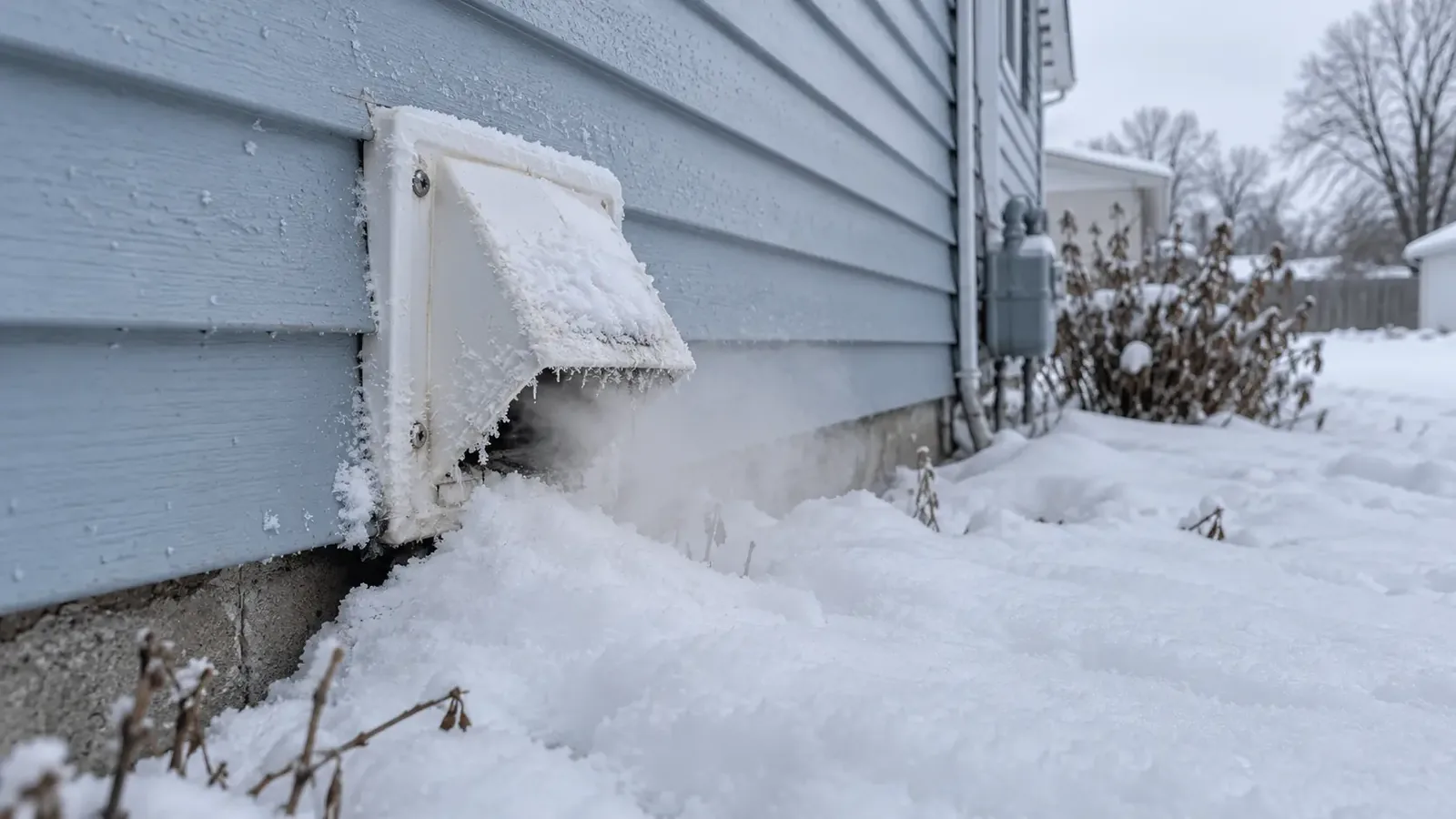
Older houses make it worse. About half the homes in the 52403 ZIP code on the southeast side were built before 1960, according to Census data, and many keep the laundry in the basement with a long vent run and several elbows. We see this pattern in Wellington Heights and Oakhill Jackson every winter.
It is also a safety issue. The U.S. Fire Administration lists failure to clean as the leading cause of home clothes dryer fires, and dryer fires peak in the winter months. That is why we check the whole vent on every no-heat call, and clean it on the same visit if it needs it. Read more on our dryer vent cleaning page.
Can a frozen vent stop my dryer from heating?
Yes. A frozen or snow-blocked vent traps the hot air, the dryer overheats and a safety part shuts the heat off. Clear the snow and ice from the outside hood first. If the dryer still runs cold with a clear vent, the thermal fuse has probably blown and needs to be replaced.
How we fix it on the first visit
- You call and describe it. Tell us the brand, gas or electric, and what the dryer does. We give you the likely cause and a time window.
- We test before we replace. We pull the dryer out, check the vent, and meter the heating circuit one part at a time.
- You get the price first. We show you the failed part and give you the full price. You decide.
- We run a heat test. The common heating parts ride on the van, so most repairs finish that visit. We run a full cycle and check the air temperature before we leave.
Dryer not working?
Tell us the brand and whether it’s gas or electric. Calls before noon usually get a same-day visit.
Dryer not heating: more questions
Questions we hear on no-heat calls around Cedar Rapids, Marion and Hiawatha.
Why does my dryer heat for a few minutes and then go cold?
Usually the dryer is overheating and a thermostat is cutting the heat. A partly blocked vent is the most common reason. A cycling thermostat that has drifted out of spec does the same thing. Clean the lint screen and check the outside vent flap first. If that doesn’t fix it, the thermostats need testing.
My dryer stopped heating after I moved it. What happened?
Three things cause most of these. The foil duct got crushed when the dryer was pushed back, only one side of the double breaker is on, or the gas valve behind a gas dryer was left closed. In a new house, an electric dryer cord wired for the wrong outlet type (3-wire or 4-wire) can also leave it with no heat.
Why does my dryer keep blowing the thermal fuse?
A thermal fuse only blows when the dryer runs too hot, so a second or third blown fuse means something else is wrong. Nine times out of ten it is restricted airflow in the vent. A stuck cycling thermostat or a shorted heating element causes the rest. We find the reason before we replace the fuse. See dryer keeps blowing the thermal fuse.
Is it safe to keep using a dryer that isn’t heating?
Running it cold won’t hurt anything, but it won’t dry your clothes either. If the dryer smells like burning, or the heat came and went before it quit, stop using it. That points to overheating, and lint near a heat source is a fire risk.
Do you fix Samsung and LG dryers that won’t heat?
Yes. Newer Samsung and LG dryers often show an error code instead of just running cold. We read the code on site and test the thermistor, the heating element or igniter and the high-limit thermostat. See our Samsung and GE and LG pages for model details.
Get your dryer heating again
Call before noon for a same-day visit in Cedar Rapids, Marion or Hiawatha. You get the price before we start, and OEM parts and labor carry a 90-day warranty. For anything else, see our main dryer repair in Cedar Rapids page.