Home › Our process
How a Dryer Repair Visit Works
You call, we set a time, we test the dryer and check the vent, you get one price, and we fix most dryers on that visit. Here is every step, what we check and how to get ready.
- Same-day for most calls before noon
- Price before any work
- Vent checked on every call
- 90-day OEM parts and labor warranty
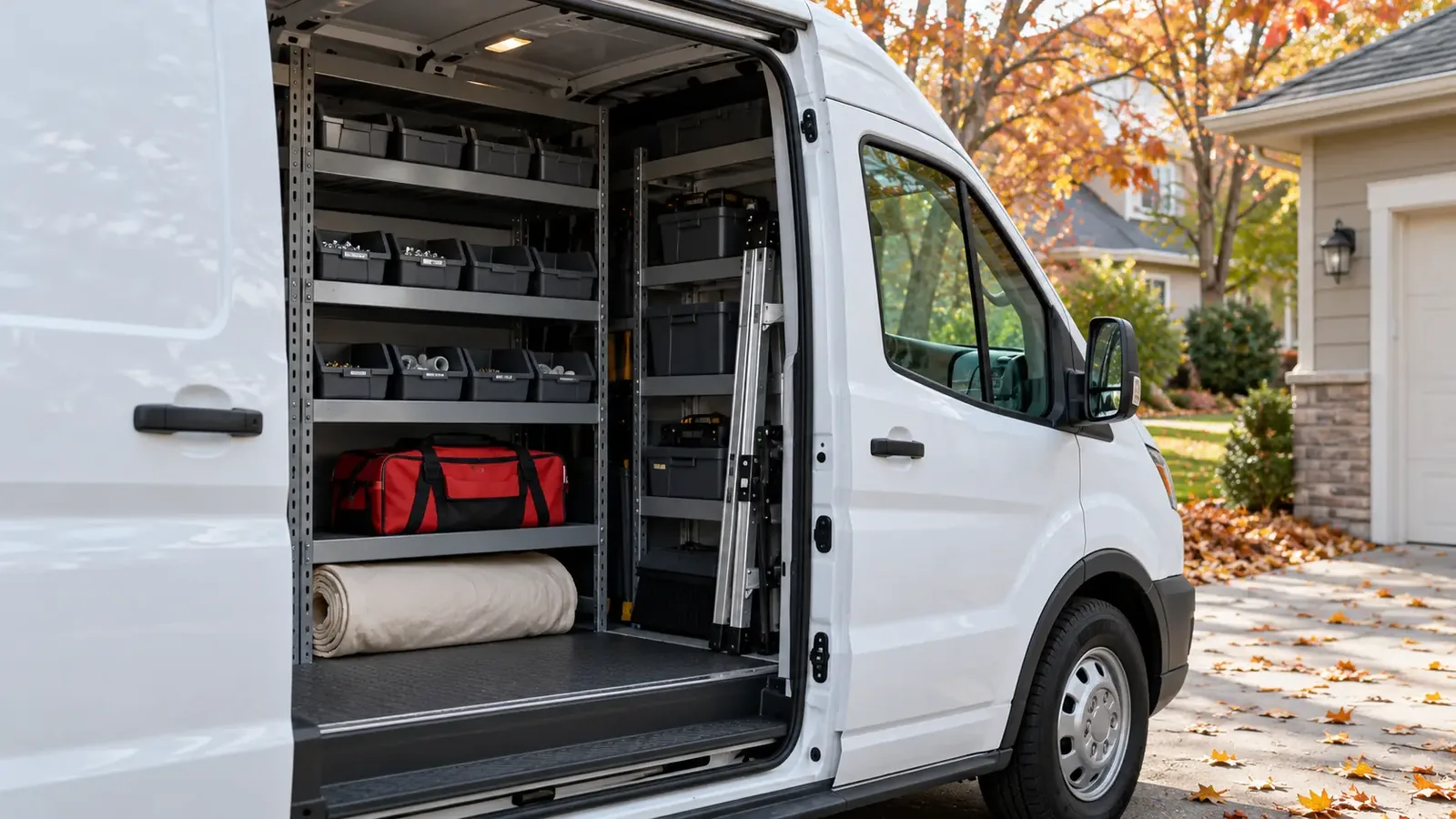
Most repairs finish in
30 to 90 min
Common parts ride on the van, so most dryers are fixed on the first visit.
The short answer
A dryer repair visit takes 30 to 90 minutes for most repairs. We check the power and the vent, test the parts in order, give you one price for parts and labor, and fix the dryer on that visit with parts from the van. Every repair has a 90-day OEM parts and labor warranty.
Same day
for most calls before noon
30 to 90 min
on site for most repairs
90 days
OEM parts and labor warranty
The eight steps of a repair visit
Every repair follows the same order, whether it is a thermal fuse in a Czech Village basement or error codes on a new Samsung in Marion.
- You call. You talk to the people who do the repair. Tell us the brand, gas or electric, what the dryer is doing, and your address. That tells us which parts to have on the van.
- We set a window. Calls before noon, Monday to Saturday, usually get a same-day visit. Later calls usually get the next morning.
- We check the power and the vent. Before opening the dryer we check the outlet (an electric dryer should read about 240 volts across both sides) and the airflow at the vent.
- We test, not guess. We meter the parts in the order they usually fail and find the one that actually failed.
- You get the price. We show you the failed part and give you one price for parts and labor. Nothing is repaired until you say yes.
- We fix it that visit. Fuses, thermostats, elements, igniters, valve coils, belts, idlers, rollers and door switches ride on the van, so most repairs finish in 30 to 90 minutes.
- We test it before we leave. A full cycle with the drum turning, heat at the vent and airflow at the outside hood.
- The warranty starts. 90 days on OEM parts we install and our labor. Aftermarket parts are not covered.
Why we test before we replace
Throwing parts at a dryer is expensive for you. A dryer that runs but won’t heat could have a blown fuse, a bad element, a failed thermostat or half its power missing, and they all look the same from the outside. A meter tells us which one in minutes.
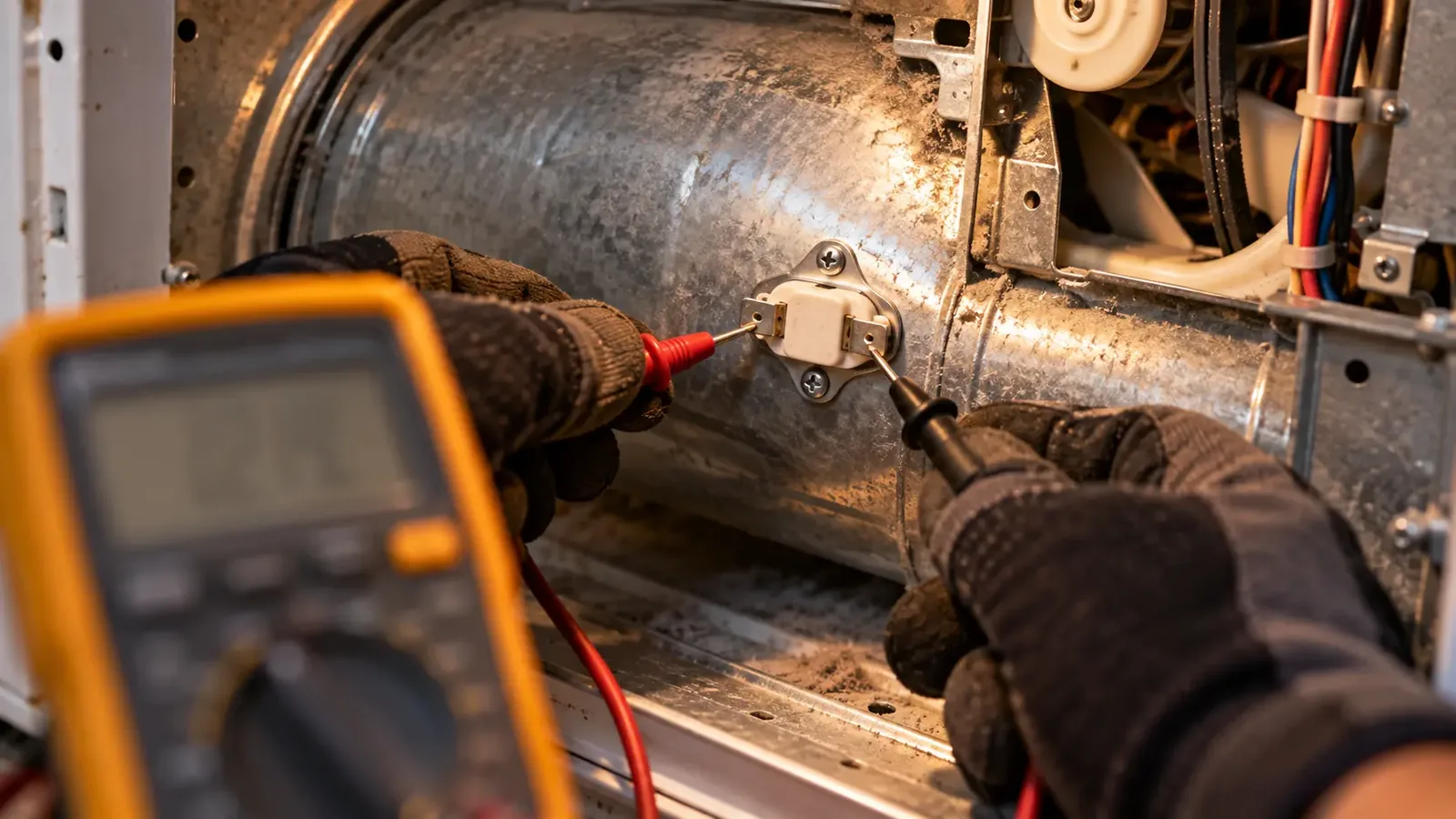
Error codes on newer Samsung, LG and Whirlpool dryers help, but they point to an area, not a part. An HE code on a Samsung can mean a blocked vent, a fuse, a thermostat or an element. We read the code, then test.
Why we check the vent every time
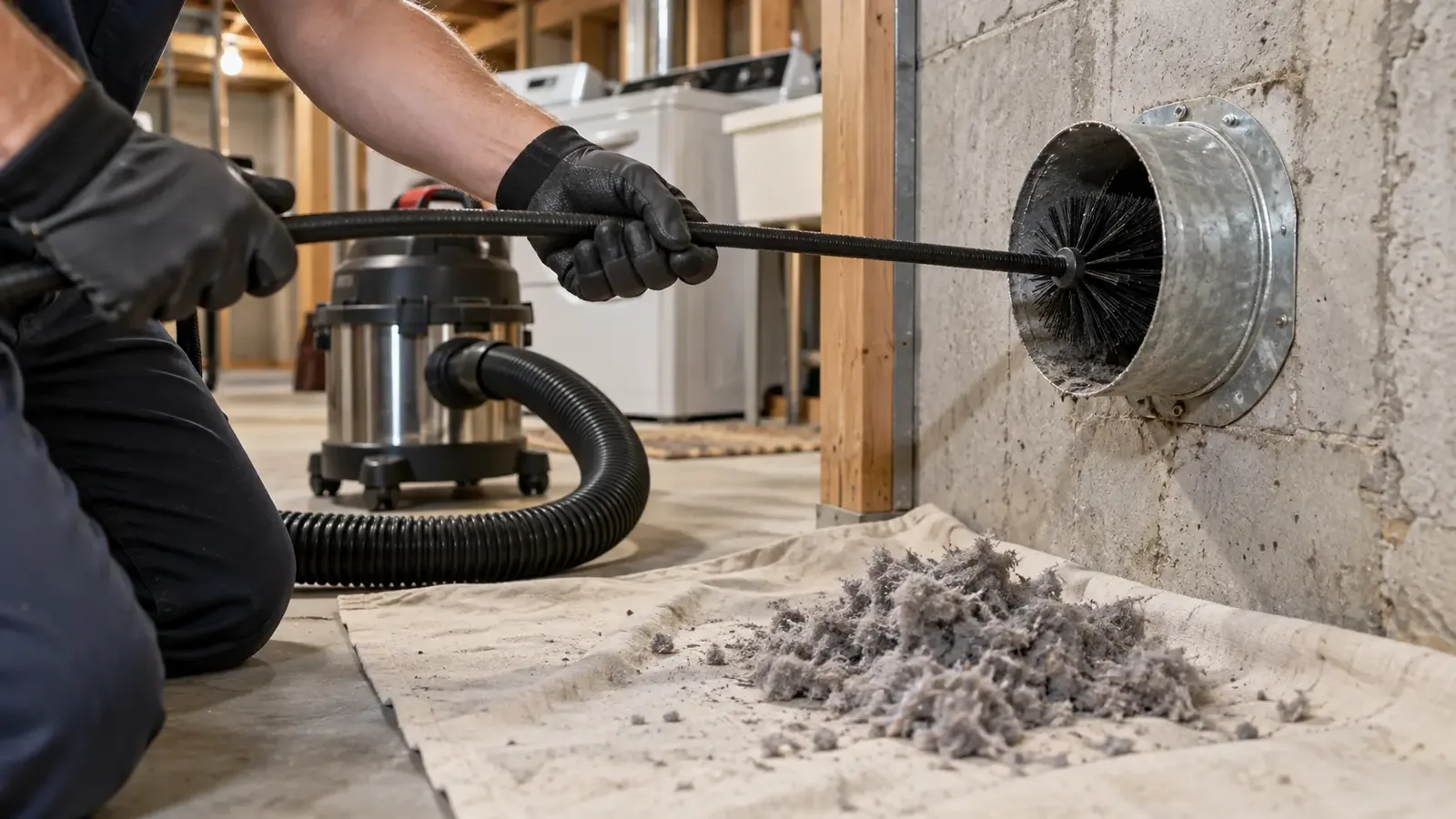
A blocked vent is the root cause behind most blown thermal fuses, many failed thermostats and elements, and most mid-cycle shutdowns. Replacing a fuse without fixing the airflow means it blows again within weeks. So we check the airflow at the outside hood on every call, and if the vent needs cleaning we tell you and can do it on the same visit.
How to get ready for the visit
- Clear a path to the dryer and a little space around it. We pull it out from the wall.
- Have the model number handy. It is on a tag inside the door opening on most dryers.
- If the dryer stopped mid-load, take the clothes out.
- Pets in another room, please. We leave doors open while we work.
- If you can, tell us where the vent exits outside. We check it on every call.
Safety on every call
We unplug electric dryers or switch off the breaker before opening them, and turn off the gas valve on gas dryers. On gas dryers we check the connection for leaks before we leave and watch the burner light cleanly.
If you smell gas, don’t wait for us. Leave the house and call Alliant Energy at 1-800-255-4268. We come once the line is safe.
Ready to book?
Tell us the brand and what the dryer is doing. Calls before noon usually get a same-day visit.
Repair visit questions
What people ask us before the visit.
Do I need to be home for the repair?
Someone over 18 needs to let us in and approve the price. You don’t have to watch the whole repair.
What if you don’t have the part on the van?
It doesn’t happen often, because we carry the common parts for all the major brands. When a part has to be ordered, usually a control board or a model-specific Samsung or LG part, we tell you the price and timing before anything is ordered.
When will you arrive?
We give you a time window when you book. Calls before noon usually get a same-day visit, later calls the next morning.
What does the 90-day warranty cover?
OEM parts we installed and our labor. If an OEM part we installed fails within 90 days, we come back and fix it at no charge. Aftermarket parts are not covered by the warranty.
Do you work on Sundays?
No. We work Monday to Saturday, 8 AM to 6 PM.
Book your repair visit
Call before noon for a same-day visit in Cedar Rapids, Marion or Hiawatha. See our main dryer repair in Cedar Rapids page for everything we fix.